How Viro autonomy works
by Banjo Adesuyi

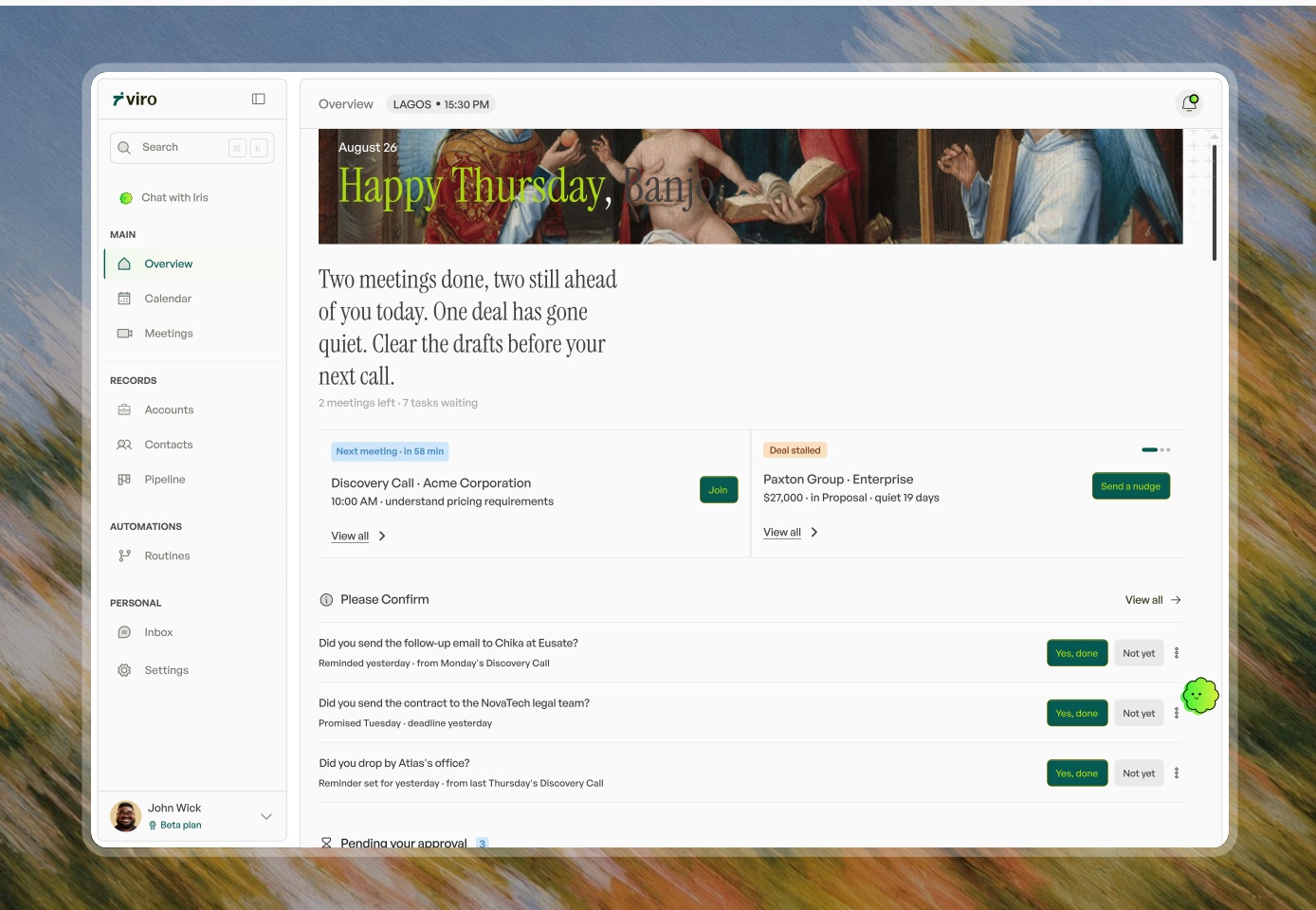
Viro does the work and you decide how much of it goes out without you. Every follow-up, record update and stage move is prepared ahead of time. Your autonomy setting controls whether it waits for your approval or goes ahead on its own.
We built it this way because trust in a new teammate gets earned. Nobody hands a new hire the keys to their biggest accounts on day one. They watch the work first, and once it's consistently right, they let go. Viro follows the same path.
The four levels
You pick a level when you set up Viro. Most people start with the recommended one.
| Level | What Viro does | Good fit if |
|---|---|---|
| Draft now, autonomous later Recommended | Drafts everything at first, then asks to take over the work you keep approving unchanged | You want Viro to prove itself before it acts alone |
| Draft only | Prepares every follow-up and update; nothing goes out until you approve it | Every message you send needs your sign-off |
| Auto early-stage | Sends and updates on its own for early-stage deals; later-stage deals wait for you | You're happy to hand off first touches but want control near the close |
| Full automation | Acts across the whole pipeline from day one; you watch and step in when you want | You've used Viro long enough to trust it fully |
How Viro earns more autonomy
On the recommended level, Viro starts by drafting everything. Each time you approve a draft without changing it, that's a signal it got the work right. Once those approvals stack up for a certain kind of task, like first follow-ups after a demo, Viro asks whether it can start handling that task on its own. You say yes or no. Nothing steps up without your confirmation, and anything you keep editing stays in draft until Viro gets it right.
Guardrails that always apply
Some limits hold whatever level you choose.
- High-value deals stay restricted. Your biggest deals wait for you, even on full automation.
- Stage moves are confirmed. When Viro wants to move a deal, it texts you on iMessage and you reply yes, no or wait.
- Your rules come first. You can set up to five things Viro should never do, like quoting a price without checking with you, and it won't do them even when asked.
- Stages move on evidence. A deal only advances when something in the conversation supports it.
Changing your settings
You can raise or lower autonomy any time, across your whole pipeline or on a single deal. If a big account needs a lighter touch, set that deal to draft only and leave everything else as it is.