
The best AI CRMs for founder-led sales in 2026
If you're a founder still doing the selling, pick the CRM that does the work after your calls, not the one with the most features. Viro is best when you want follow-ups, proposals and updates done for you. HubSpot suits teams with marketing and a person to run it. Attio suits teams who enjoy building their own system. Salesforce and Rox are built for large enterprise sales teams.
We make Viro, so weigh our view accordingly. Each summary below is based on our side-by-side comparisons, last checked September 2026.
At a glance
| CRM | Best for | Who does the follow-up | Setup |
|---|---|---|---|
| Viro | Founders and small teams who sell | Viro writes it in your voice and texts it to you to send | Log in to your old CRM. Works from your first call |
| HubSpot | Teams that want marketing and sales in one place | You write it, or ask AI for a draft | You update fields and stages by hand |
| Attio | Teams who want to design their own data model | An agent or workflow you build | Design objects, workflows and agents first |
| Lightfield | Teams who live in calendar meetings | A draft to review in the app | Agents you describe and build |
| Salesforce | Large sales teams with an admin | You write it yourself | An admin to set it up and keep it working |
| Rox | Large enterprise sales teams | A draft for you to review | Sits on top of Salesforce or HubSpot |
What matters for founder-led sales
Founders rarely lose deals in the meeting. They lose them in the days after, when the recap, the proposal and the check-in compete with hiring, building and fundraising. So the questions worth asking a CRM are:
- Does it do the follow-up, or just remind me?
- Does it update itself, or does it need typing in?
- Does it work for phone calls, not only calendar meetings?
- Will it remember “call us back in Q3”, months later?
- Can I run it without an admin?
1. Viro: best for founders who want the work done
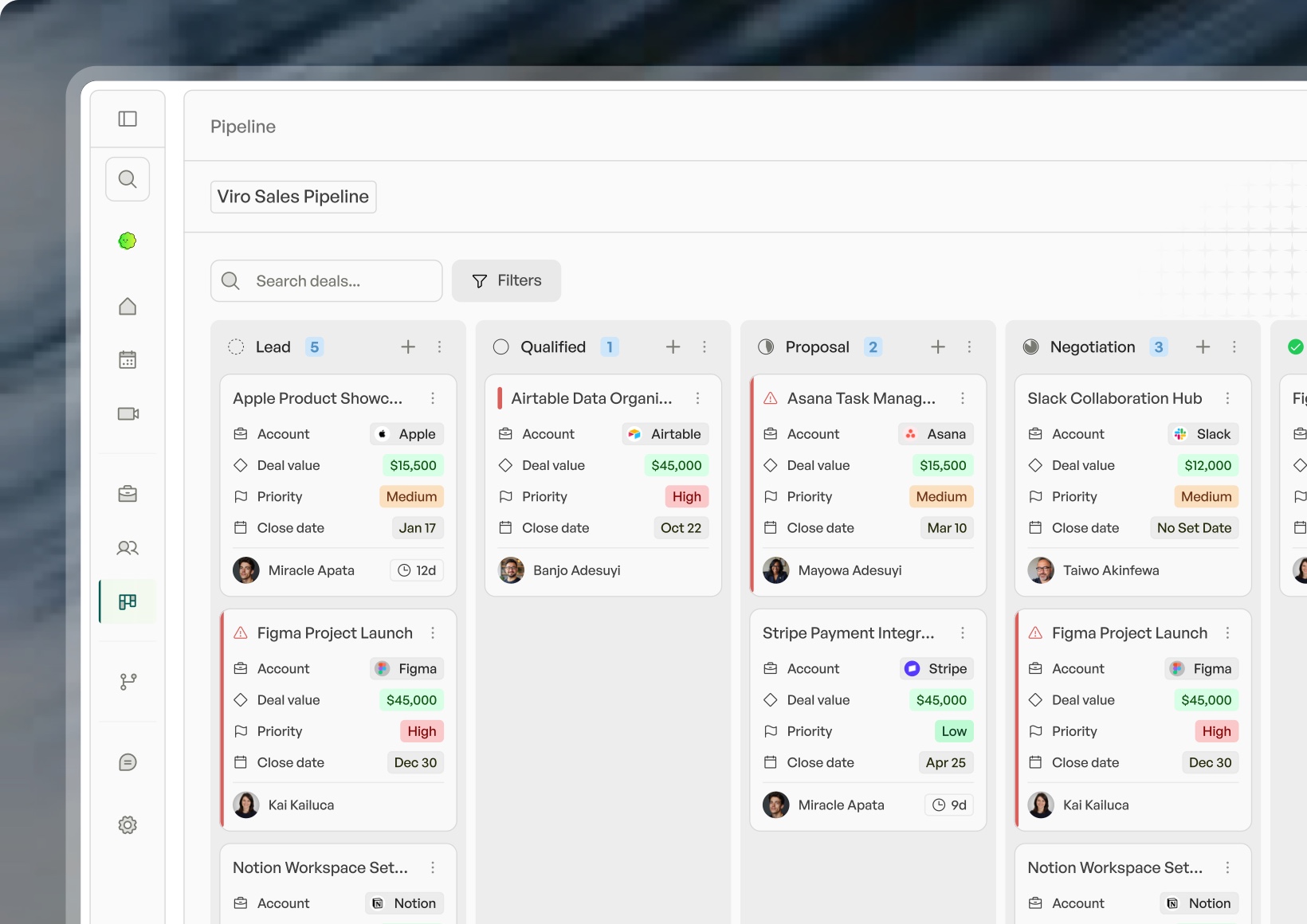
Viro is a self-executing CRM. Iris joins your calls, and when they end the follow-up is written in your voice with the proposal or deck attached, the record updates itself and the next meeting is offered. Iris texts you on iMessage and a one-word reply sends it. It follows up in Q3 when a buyer asks you to, and drafts win-back emails for your old leads in your first week.
Best for: founders and small teams who sell on calls and the phone. Not for: teams whose main need is cold outbound sequencing. Pro is $97 a month; see all plans.
2. HubSpot: best for marketing and sales in one place
HubSpot holds whatever you type into it, and it's strong when marketing and sales share one system. The trade-off for a small team is the upkeep: notes, stages, next steps and close dates are updated by hand, and the follow-up is yours to write. Viro vs HubSpot.
3. Attio: best if you want to build your own CRM
Attio hands you the parts: you design the objects, wire up the workflows and set up the agents. That flexibility suits teams who enjoy building their system. The cost is the weeks of setup before the follow-up writes itself, and rebuilding when the way you sell changes. Viro vs Attio.
4. Lightfield: best for calendar-first teams
Lightfield remembers what was said in your calendar meetings and drafts a follow-up when you ask in the app. Calls on your dialer and work from your phone are where it's thinner. Viro vs Lightfield.
5. Salesforce: best for large teams with an admin
Salesforce is built for big sales teams with people to run it. For a founder-led team, most of it sits unused and the rest needs typing in. Viro vs Salesforce.
6. Rox: best for the Global 2000
Rox runs a swarm of agents on top of Salesforce and your data for big enterprise sales teams, so you keep paying for both systems. Viro vs Rox.
Also worth knowing
If you're comparing call tools rather than CRMs: Gong scores calls and flags risk but leaves the work to you. Zero and Monaco are built for finding leads and booking meetings, not closing them. Ahoy drafts today's follow-up but not the one due in Q3.