
AI notetaker or self-executing CRM: which do you need?
Short answer
An AI notetaker records the call and gives you notes and a summary, which you then act on yourself. A self-executing CRM records the call and does the work that follows: the follow-up, the attachment, the record update and the next meeting. If your problem is remembering what was said, a notetaker helps. If your problem is doing what was agreed, you need the CRM to do it.
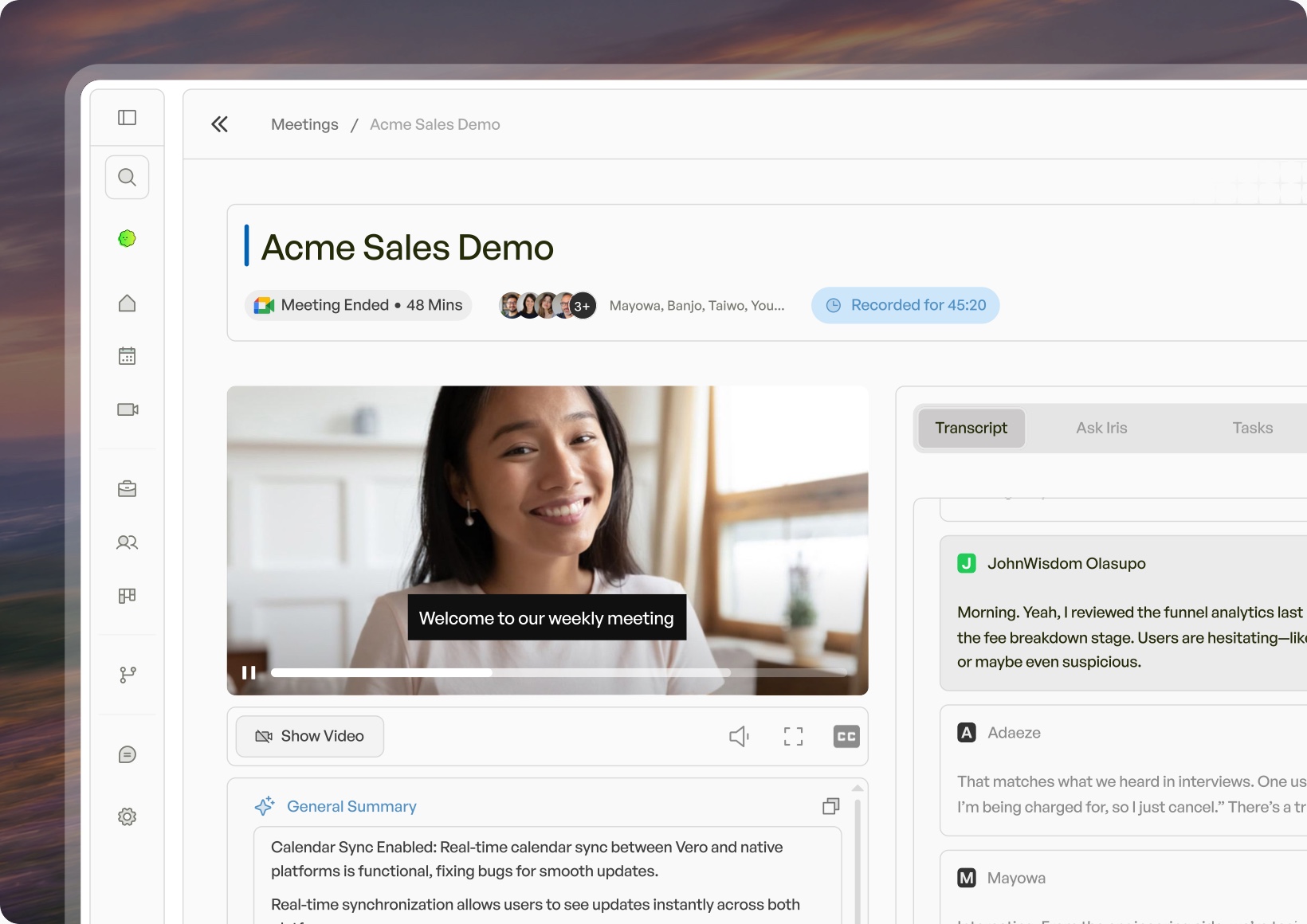
The difference in one table
| After the call | AI notetaker | Self-executing CRM |
|---|---|---|
| You get | Transcript, summary, action items | The finished follow-up, ready to send |
| The proposal or deck | You build it | Built and attached |
| The CRM | A separate system, synced or typed into | It is the CRM, and it updates itself |
| The next meeting | You book it | Times offered, booked when they pick one |
| “Call us in Q3” | In the notes | The check-in is ready in Q3 |
| Tools you pay for | Notetaker + CRM | One |
When an AI notetaker is enough
- Your meetings are mostly internal, research or hiring calls.
- You already have someone who turns notes into follow-ups and keeps the CRM clean.
- You want a searchable record, not finished work.
When you need the CRM to do the work
- You're selling, and deals slip in the days after good calls.
- You copy summaries out of one tool and paste them into another.
- Proposals and decks get built late at night.
- Your CRM is out of date because nobody has time to update it.
Can you use both?
You can, but with a self-executing CRM there's little left for the notetaker to do. Viro already joins your calls (visibly as Copilot, or on your behalf in Proxy mode), captures phone calls from your dialer, and keeps every call transcribed and searchable. What is a self-executing CRM?